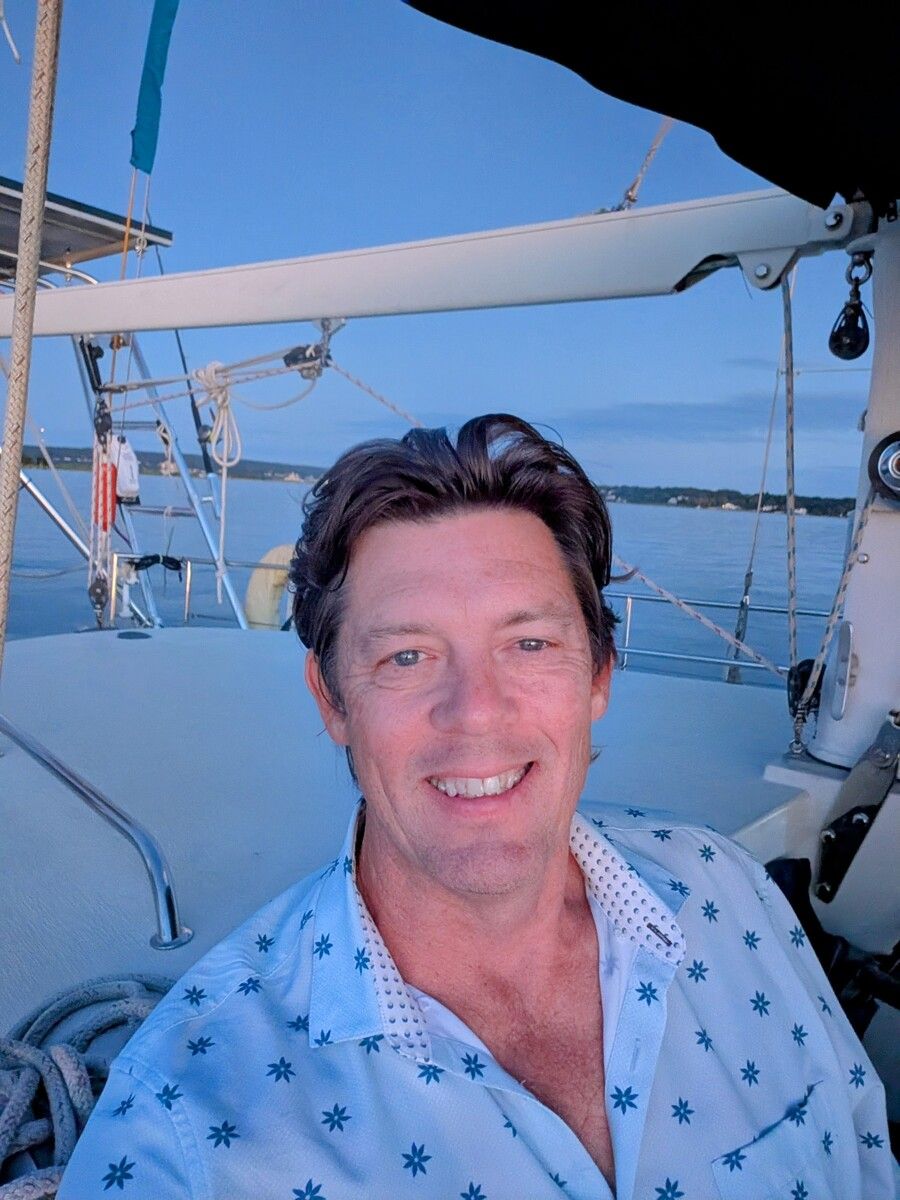
🌊The Sea State
I left the St. Augustine Municipal Marina mooring field yesterday heading to Ft Launderdale. I timed my departure with the 2 p.m. Bridge of Lions opening, slipped through the span, and fought the incoming tide out the inlet. Once clear of the channel, I eased CELTIC CROSS over to a course of about 170° and let her fall into the reach.
The wind has been steady out of the east, sitting between 17 and 21 knots—just about ideal for this stretch. With the main and genoa set, the boat feels balanced and quick, holding anywhere from 7 to 8 knots. It’s been one of those easy, cooperative beam reaches where everything seems trimmed just right
Because I’m heading south, I’m keeping in close to shore to avoid drifting into the Gulf Stream. I’m only making a one-day run, and slipping east of the Stream would turn an easy passage into a slog. With the breeze blowing straight off the ocean, staying in tight comes with its own concern— the lee shore. The seas are running about three to four feet on the port beam, spaced far enough apart to stay comfortable, but the shoreline is always just there in the corner of my eye
I’ve been walking through contingency plans as I sail—where I’d turn, what I’d drop, what I’d do if the wind built or something let go. Nothing dramatic, just the quiet math that comes with sailing down a coast with land downwind. For now, everything is steady. Good wind, good angle, and a clean run south.
📝Harbor Notes
Last Sunday, I pulled up the anchor north of the Bridge of Lions last Sunday morning with a quiet clock ticking in the back of my mind. The bridge opens every thirty minutes, so slipping through it wasn’t the concern—the launch service from the mooring field to the dock was. That boat only runs every two hours, and the noon run was the one I had to make. Missing it would have pushed the whole day off track.
My father was driving in to take me home for Thanksgiving, and before stepping off the boat I still had to get on a mooring ball, secure CELTIC CROSS for the week, and leave her in a state where I wouldn’t worry about her from a hundred miles away.
I timed my approach for the 10:30 opening and fell in behind two boats waiting ahead of me. As the spans lifted, everything looked routine—until we funneled through the bridge. The lead boat suddenly throttled back without warning, forcing me and the boat in front of me to pull power fast. I bumped into reverse and for a few seconds I rode closer to the stern in front of me than I liked while keeping enough steerage not to let the wind push me around. It was tighter than it should’ve been, and the clock in my head ticked a little louder.
Once clear of the bridge, I angled into the mooring field between the Red 8 and 10 buoys, called the municipal marina office on 71, and headed toward my assigned mooring.
When I reached the ball, someone was already on it—an older sailor who moved slowly and steadied himself with care as he climbed out of his dinghy and around his boat. Nothing about the moment felt like it would be easy or quick to sort out in person, so I called the marina and asked them for instructions.
Then came the waiting.
Five minutes became ten. Ten stretched toward twenty. I made slow, deliberate circles through the mooring field, careful to stay west of marker 10 where the shoals rise quickly. Each loop burned fuel and cut into the time I needed to pack the boat and catch the noon launch.
After about twenty-five minutes of circling, I decided to act. I picked an open ball near my assigned but occupied spot, motored up into the wind, caught the pendant cleanly, and tied off. A few minutes later, the marina came back on the radio: the ball I had chosen was where they were going to put me.
With that, the tension of the morning started to ease a little. CELTIC CROSS settled onto her mooring, the bow pointing into the breeze. But I still had a lot to do in less than an hour.
Before doing anything else, I grabbed my mask and fins, slipped into the water, and dove the mooring. I checked the chain and shackles beneath the ball—the hardware anchoring my home to the bottom. I wanted to be certain everything was intact before leaving her here for seven days. It was one thing I didn’t want to think about during Thanksgiving.
When I climbed back aboard, a couple idled past in their dinghy and slowed to ask about my two downwind poles lashes to the lifelines. They always draw attention.. We traded a few minutes of easy harbor conversation before they moved on. Tick-tock.
I finished shutting the boat down, closed the sea chest and water tight doors, wrote myself a note to open the sea chest and taped it to the ignition, grabbed my bags (which fortunately I had packed the night before), locked everything up, and was standing by as the noon launch approached. As it pulled away, I watched CELTIC CROSS swing quietly on the ball, already settling into her week of rest.
Sometimes, the tension isn’t from storms or waves. It’s the small things—tight bridges, shifting plans, and long waits—that build up.
Song of the Crossing
Daylight by Watchhouse (Formerly Mandolin Orange) popped up in my playlist this week, and I kept going back to it. The fiddle sits right at the center of this tune—clear, warm, and steady—hanging out behind each verse and stepping forward for a few simple, confident solos with perfectly places double-stops.
My own fiddle (Popeye) is with Bob Parsons—the same luthier who worked on it when I passed through St. Augustine last May—after I picked it up to play a couple weeks ago and immediately realized the action was far too high. The glue holding the neck to the body had given up, which I guess happens when you keep an instrument made up of thin pieces of wood held together by hide glue in an environment full of salt air and humidity. So now he’s in Bob’s hands for reinforcement and reset. I am confident when I swing back through in the Spring, we’ll be reunited and Popeye will be stronger than ever.
What kept drawing me back to Daylight this week wasn’t anything in the lyrics. It was the way the fiddle shapes the song—confident, unhurried, sure of its place. Listening to that line while my own instrument was away felt steadying, almost like the tune filled the gap until Popeye was whole again
Listen to this live version of Daylight
Melodies Aloft - Shana in the Old Ice House
Cypress & Grove still carries the memory of what it used to be. Long before it was a brewery, it was once Gainesville’s ice house—the place where people came for the blocks that kept things cold in the Florida heat. The machinery is gone, but on Monday nights the courtyard fills with a different sort of energy. Tents go up, the farmer’s market settles in, and the space glows under strings of warm lights.

On what was the old loading dock, stood a single musician.
Shana Alverson played alone with her guitar, no band behind her, no loops or effects to fill the space—just her voice and the instrument she leaned into. Her rendition of Neil Young’s Harvest Moon, pulled me in immediately . Later she launched into Janis Joplin’s Me and Bobby McGee, letting her voice roughen and rise in a way that felt honest and lived-in rather than imitated.
During a short break, I walked over to tell her how much I enjoyed her set. She was easy to talk to, and in that brief conversation she shared a glimpse of her story. She had worked on her music for years. She watched as friends around here found early musical success. This drove Shana to work harder until burnout set in. Only recently has she begun performing again, and hearing that made her voice feel even more grounded.
As she tuned up for her next set, the market kept moving —families eating together at picnic tables, kids zigzagging between tents, vendors chatting across their displays. When she returned to the mic, her voice settled naturally into the space, moving through the crowd and giving the night its shape.
Standing there with the lights overhead, the market in full swing, and Shana’s music drifting across the courtyard, the whole scene felt like a reminder of what Gainesville has always done well: mixing people and sound into something warm and alive. Here’s a short clip of Shana singing Lyle Lovet’s If I Had a Boat
After Thanksgiving lunch with my parents, I drove back into Gainesville expecting to grab something simple for the night. Nearly every place was dark. Empty lots, locked doors, chairs stacked in windows. It felt like the whole town had gone quiet at once.
Then, turning a corner downtown, I noticed a tent set up and a small crowd under it in front of The Bull. Mandolin and guitar were in the air—Irish folk tunes. Curiosity did the steering from that point on.
Inside The Bull, they were pouring a pint of Guinness that turned out to be one of the best I’ve had in Gainesville. The bartender told me the gathering wasn’t a normal Thursday night. It was a Thanksgiving dinner for anyone who didn’t have a place to go. The event was put on by the Meizon Church of Gainesville, and The Bull opened its space so the meal could happen right there on the sidewalk. Simple generosity, shared between a bar and a church - my kind of mix.
There was food left—plenty—so I made myself a plate and found a spot near the music. The duo playing under the tent introduced themselves as Jason and Scott, performing as Jig to a Milestone. They also run the traditional Irish session at The Bull.
I talked briefly with Pastor Kevin from Meizon Church. This was their third year doing the dinner. No fanfare, just a community meal offered to anyone who showed up. Then Jason and Scott finished their set and stepped off to pack up. I talked to them for a few. They were easygoing, friendly, proud of the music they keep alive here in Gainesville.
It wasn’t the night I expected, but it was one of those moments that remind you how a town can still surprise you—people sharing food, strangers becoming neighbors for a few hours, and music binding it all together under a tent on a holiday night.
Log Book
Taming the Mizzen Ballooner
Somewhere on the run from the Chesapeake down toward Charleston, I finally had the right wind angle to raise the mizzen ballooner. It flies forward of the mizzen mast and, when the wind settles between 90° and 150° off the bow, it turns CELTIC CROSS into a different boat. It’s one of those quiet Amel tricks you only understand once you see the boat pick up speed and settle into the groove with this colorful sail flying.
Most forum posts read make it sound simple: attach the tack forward of the dodger, run the sheet attached to the clew aft to a block near the stern and then back to the secondary winch in the cockpit, raise the sail on a halyard and handle everything from the safety of the cockpit. Raising it is fine just head to 70° apparent and send it up. But when it’s time to bring it down, that’s where things get messy for me.
One post on the Amel forum suggested the “just let it fly” method. Tie the halyard off, release it completely, and grab the foot of the sail as it spills. Easy on paper.
The first time I tried it, the halyard snapped free and shot upward like it had something to prove. My instincts cut in at the worst possible moment. Instead of letting it run, I grabbed the line bare-handed. The rope burned a deep track across my index finger before I even registered what was happening. By the time I got the sail under control, the blister was already forming.
When I reached Charleston, I called North Sails in the Safe Harbor Marina—the same crew who’d fitted the sun cover on my genoa the last time I passed through. They’d earned my trust with quality work and service. I explained what happened and asked for a sock (they called it a snuffer) be built to fit the sail.
They drove out to the marina, picked up the sail, and turned the whole project around with the urgency of people who understand what it means when a sailor says, “I’m trying to get out of here.” The timing couldn’t have been tighter. They finished the snuffer and delivered it the same day I cast off for St. Augustine.
Now I have a way to raise and drop that sail without gambling fingers, skin, or sanity. And on this boat, unlocking one more tool in the sail plan feels like a small victory tucked into the log.
🧭My Bearings
Thanksgiving afternoon, after the plates were cleared, my dad and I ended up talking about music. What started as a simple question turned into forty-five minutes of him walking me through scales and how musicians work within them. He explained it the way he always has—slow, patient, certain—as if the knowledge sits so deep he can reach for any piece of it without effort.
Watching him break down something so natural to him brought up a familiar regret. I wish I’d started earlier. I wish I’d listened when he handed me that trumpet in sixth grade. Instead, I drifted away from the music he tried to put in my hands and didn’t circle back until my forties, when I finally picked up a guitar. Sitting there, hearing him describe dissonance and resolution in music, I felt the distance between what he knows and what I know more sharply than usual.
But the regret isn’t complete. My friend Harold reminded me once, You did build something, he said. You were around that music your whole childhood. And he’s right. My dad played with the Air Force Band for twenty years, and I was there for so many of those gigs, listening without realizing what I was absorbing. I sang in the church choirs he directed, learned to follow cues, learned how to blend a voice into something larger. Those pieces weren’t lost. They just stayed quiet for a few decades, waiting for later.