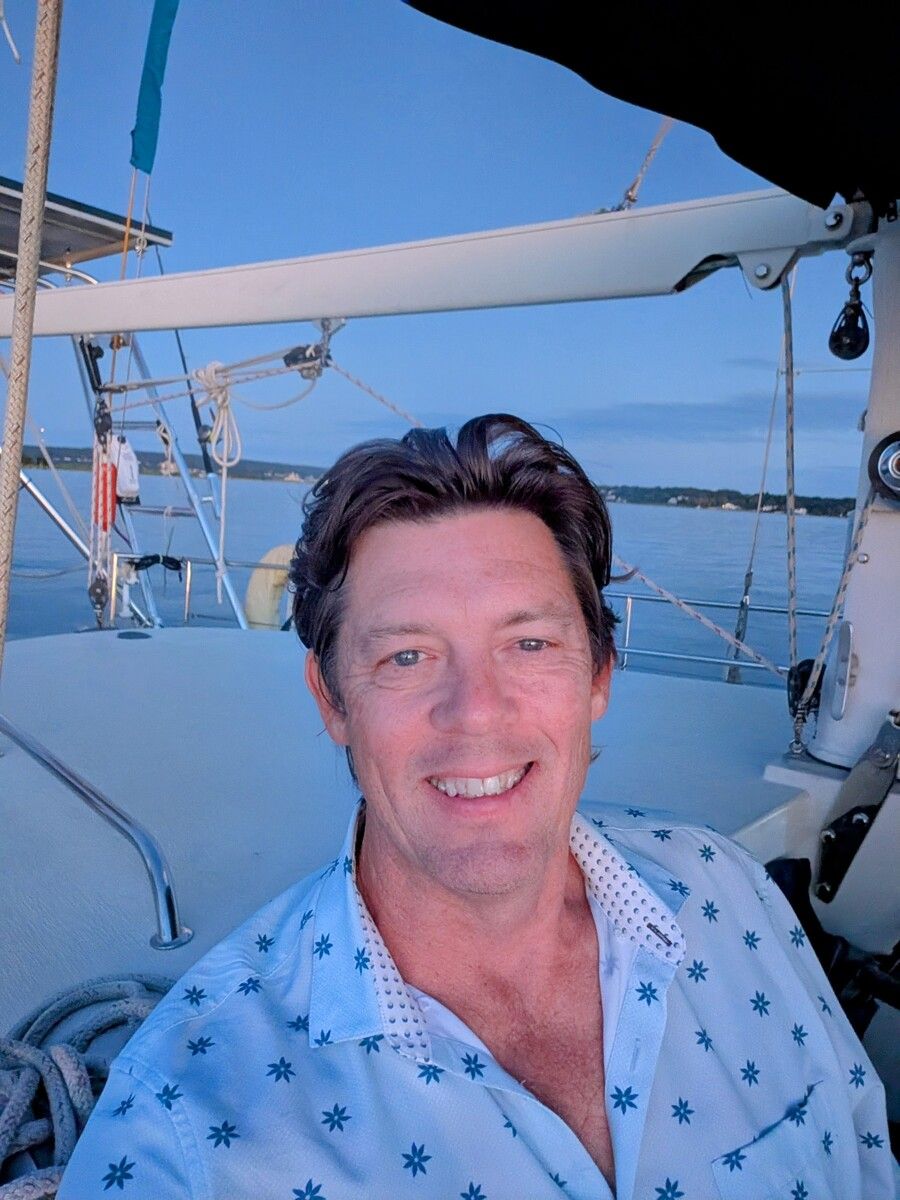
The Sea State
The weather in St. Augustine this past week has had that November rhythm—light mornings, breezy afternoons, and evenings that cool just enough to remind you winter isn’t far off.
Most days have opened calm and glassy, the river smoothing itself out like it’s trying to convince you to stay another day. By late morning the breeze fills in from the northeast, steady but rarely aggressive, enough to set the boats in the anchorage swinging gently on their rodes. The afternoons have been the busiest, with the wind stiffening across the river and the chop starting to build just enough to slap the hull when the tide opposes it.
Nights have been the reward. The air settles, the wakes die down, and the Matanzas turns reflective and dark—only the anchor lights and the glow of Christmas lights adjourning the old city breaking the surface. It’s the kind of weather sailors come to Florida for: workable, predictable, forgiving… with just enough personality to remind you you’re not tied to the dock.

The tides here have been doing their usual dance—two strong ebbs each day that can swing a boat nearly 180 degrees, especially in the north anchorage. Between the current, the breeze, and the weekend traffic, it’s been lively, but never unkind.
All in all, St. Augustine has served up a week of weather that matches the city itself: gentle, steady, and full of small shifts that keep you paying attention.
Harbor Notes
10 days ago, I entered the St. Augustine Inlet with the Great Cross off my bow and the sea buoy sliding astern, feeling the strange, familiar tug of a place tied tightly to my past. As a child I spent a lot of time here—touring the fort, wandering the old streets, I even learned to swim at a KOA campground pool off A1A. I returned as an adult for my first wedding anniversary, in the same city where my grandparents first met during World War II. This place has always been part of me.
I started out anchored south of the Vilano Bridge in twenty feet of water. Good holding, but busy boat ramp, plenty of wakes to keep me honest. (29°54.767N - 81°18.212W)
Later in the week I moved north of the mooring field next to the Bridge of Lions. (29°53.993N - 81°18.375W) It put me closer to the dinghy dock, perfect for slipping into town for dinner or early-morning breakfasts. The spot I chose to anchor was deep (29 feet), and I tucked in right near the channel—figuring most boaters wouldn’t choose to anchor that close. It worked fine until Friday. Weekend crowds filled the anchorage, and a couple on a newly purchased Oceanis dropped anchor and settled right off my beam. With the way boats danced on the current here, I felt like our boats would surely make contact at some point. A quick, polite conversation, and they re-anchored without hesitation.
St. Augustine is one of those rare places where memory and present time overlap. I’m living on the hook now, drifting with the tide, but in a place I’ve known all my life. Somehow, that makes the swing feel steadier.
Song of the Crossing
Long Black Veil – The Chieftains (with Mick Jagger)

Harold and me at Ann Omalleys open mic
Tuesday night at Ann O’Malley’s open mic, my friend Harold and I dusted off an old favorite—Long Black Veil—but our inspiration was not the version most people know. We listened to the Chieftains’ take, the one with Mick Jagger’s weathered voice drifting over Irish pipes and fiddle. It’s a version that feels half folk ballad, half ghost story—perfect for a room full of sailors, wanderers, and late-night storytellers.
There’s something fitting about bringing that song into this particular week, here in St. Augustine. This whole issue—or maybe this whole stop on my voyage—has been about revisiting the past from a distance, stepping back into a place that shaped me while seeing it through the eyes of who I am now.
Long Black Veil carries that same kind of echo. It’s a song rooted in memory, in the weight of choices made long ago. But in the Chieftains’ version, with the Irish instrumentation beneath it, the whole thing feels like it comes from somewhere old and tidal—something carried on the wind.
Playing it here, in a city where I had experienced so much in the past —there was a symmetry to it. A song about the pull of the past and regret performed in a town threaded so deeply through mine. It felt right for this harbor, for this moment in the journey.
And as I played mandolin and Harold on guitar and vocals, the song became less about its story and more about the way music can anchor us. How it can tether a sailor to memory as surely as a line holds a boat to its cleat.
Give it a listen and let me know what you think.
People of the Tide
Smokin’ Joe – Keeper of the Open Mic
Every harbor has its characters—the kinds of people who give a place its pulse—and here in St. Augustine one of those unmistakable voices belongs to Smokin’ Joe. If you’ve spent any time wandering the old streets at night, chances are you’ve heard him before you’ve seen him: that gravel-warm voice, that easy rhythm, that mix of folk, blues, and pure St. Augustine soul.
Joe isn’t just a performer here; he’s part of the place. He hosts the open mic at Ann O’Malley’s, where he acts as ringmaster, cheerleader, and unofficial patron saint of nervous newcomers.
And he’s got a world beyond the barstool too—his music and personality live online at folkyouhard.com, which feels exactly like the sort of name Joe would choose: irreverent, funny, and completely in on the joke.
When Harold and I played Tuesday night—Joe set the tone from the moment I walked in. Warm handshake and a couple of easy words that dissolve nerves faster than a pint ever could. He asked me about my mandolin, one of my most prized instruments gifted to me by a lovely luthier from Austin (you’ll hear more about her someday). But back to Joe, the thing about him: he doesn’t just host an open mic; he cultivates a little musical safe harbor in the middle of the city.
In a place steeped in centuries of history, Joe is part of the living heartbeat—the nightly tide that rises with laughter, music, and the stories we tell in between songs.
Check out Smokin’ Joes rendition of one my favorite John Prine songs, Paradise.
Melodies Aloft
Jordan – The Banjo From Six Acres
I met a street musician Thursday afternoon, the kind of encounter that happens when you’re wandering without a destination (actually I was heading back to the dinghy dock from lunch) and the sound of a single instrument pulls you in. His name is Jordan, though on Instagram he goes by @oldboyjo a handle that somehow matches both his style and his spirit.
Jordan comes down every year from north of Chattanooga, Tennessee, just in time for the Nights of Lights, when St. Augustine dresses itself in white and gold and the whole city glows like a lantern for Christmas. He stays a few weeks, playing on the streets and gathering stories, then heads back to his six acres, tucked somewhere in the hills of Tennessee.
He plays banjo in the frailing style—old-time, rhythmic, percussive. The kind of playing that sounds like front porches, mountainsides, and boots on wooden floors. He told me he learned it simply by watching other musicians’ hands. No formal lessons, no method book, just observation and repetition. He was a guitar player first, and when the banjo found its way into his life, he studied the motions of other musicians hands closely until the music followed.
There’s a raw honesty in the way he plays—steady, driving, heartfelt—as if the tune comes up through the ground and not just out of the instrument. People paused as they passed, drawn in by that hypnotic frailing pattern, the way the notes snapped and rolled through the narrow streets of the old city.
This is the kind of meeting that reminds me why I love traveling. You drift into a town, follow a sound, meet a stranger with a story, and walk away feeling a little richer for the moment. Jordan may only be here for the lights, but for a few weeks each year he becomes part of St. Augustine’s soundtrack—another melody aloft above the cobblestones.
Log Book
Battery Wars: Leaning Toward Lithium
This week has been one long wrestling match with a decision I knew was coming but kept trying to postpone: upgrading my house bank.
The lead-acid batteries I installed about two and a half years ago are showing their age. They have been discharging at a faster rate than usual. What used to last through the night now drains before dawn, leaving me chasing amps instead of chasing horizons. I had to take two out of the bank due to an internal short.
I started digging into other Super Maramu owners’ experiences with lithium upgrades—hours of forum threads, email exchanges, reading detailed posts about charging profiles, alternator protection, and real-world performance. And the pattern is unmistakable: everyone who made the jump to lithium seems genuinely happy they did. Not “this is fine,” but this changed my whole boat.
Lithium isn’t cheap. It’s not simple. It’s not something you install casually between breakfast and a swim. It’s a major refit—a shift in how the boat stores and manages energy, and by extension, how I live aboard and how I cruise. But every sailor who has done it says the same thing: life on lithium feels different. More freedom. More usable capacity.
I did consider sticking with what I know: another set of lead-acid batteries, or even upgrading to AGM. Both options would be simpler, cheaper, and require far less disruption. And honestly, there’s a comfort in the familiar. Lead-acid is predictable. AGM is solid. Lithium, on the other hand, demands new equipment, new thinking, and a healthy respect for the systems behind it.
But then again—so does sailing.
The turning point came when I found an installer in South Florida who comes highly recommended—not just by other owners, but by a rep from the factory that makes the batteries themselves. That gave me confidence. If I’m going to make a leap like this, I want the right person holding the lines.
Now I’m leaning hard toward the upgrade. The pros are compelling:
– More usable energy without babying the system
– Longer lifespan—years longer than lead-acid
– Less weight, which matters.
– Freedom to live aboard comfortably without micromanaging volts
The cons (I think) are almost entirely up front: cost, installation complexity, and the fear of stepping away from a system that—while imperfect—I know inside and out. Maybe there are more than I realize. If anyone has thoughts on this, feel free to share in the comments.
But out here in the Matanzas, swinging at anchor each night, it’s becoming clear that reliable power isn’t a luxury. It’s part of the rhythm of living aboard. And after a week of watching my lead-acids limp along, I can feel the decision settling: lithium is likely the next chapter in this boat’s energy story.
My Bearings
Why This Newsletter?
When I first set out to create this newsletter, I wasn’t entirely sure what I wanted it to become. I only knew that something in me needed it. Living on a sailboat is beautiful and freeing and, at times, profoundly lonely. There are long stretches where the world feels distant—friends become voices you rarely hear, conversations that once happened daily fade into memory, and the rhythm of life becomes quieter, more internal.
I realized I missed sharing.
Not just the destinations or the sunsets, and not just short clips or pictures on social media, but the small moments that make up a life afloat—the music, the decisions, the frustrations, the joys, the anchorage drama, the characters you meet, the way a place can reach back into your past and anchor you in unexpected ways.
This newsletter is the answer to that.
A way to reconnect. A way to speak out into the world instead of only listening to the wind and the water. A way to invite others—people who love sailing, or music, or travel, or simply the feeling of being in motion—into the cockpit with me for a while.
And I’ll be honest: starting the first issue was harder than I expected. I stared at blank pages and wondered who would care. But once the words began to move, the whole thing opened up. Suddenly I was revisiting old memories of St. Augustine, writing about this anchorage, describing the open mic night with Harold, thinking through the big decision about lithium batteries, and capturing the weather and the people who make this harbor feel alive.
Somewhere along the way, the simple act of writing made me appreciate the experiences more deeply—like narrating the story as I live it. It reminded me why I chose this life in the first place.
And maybe most exciting of all, it reminded me that this journey isn’t something I have to do alone. Through this newsletter, I can share it with a wider crew—people who get it, people who are curious, people who find a piece of themselves in the stories.
This is only the first edition, but already it’s given me a sense of direction, of purpose, of connection. In the coming months, there will be more decisions to make, more crossings to plan, more refits and refuels and recalibrations—both literal and personal. And I’m looking forward to sharing all of it.
More to come…
