🌊The Sea State
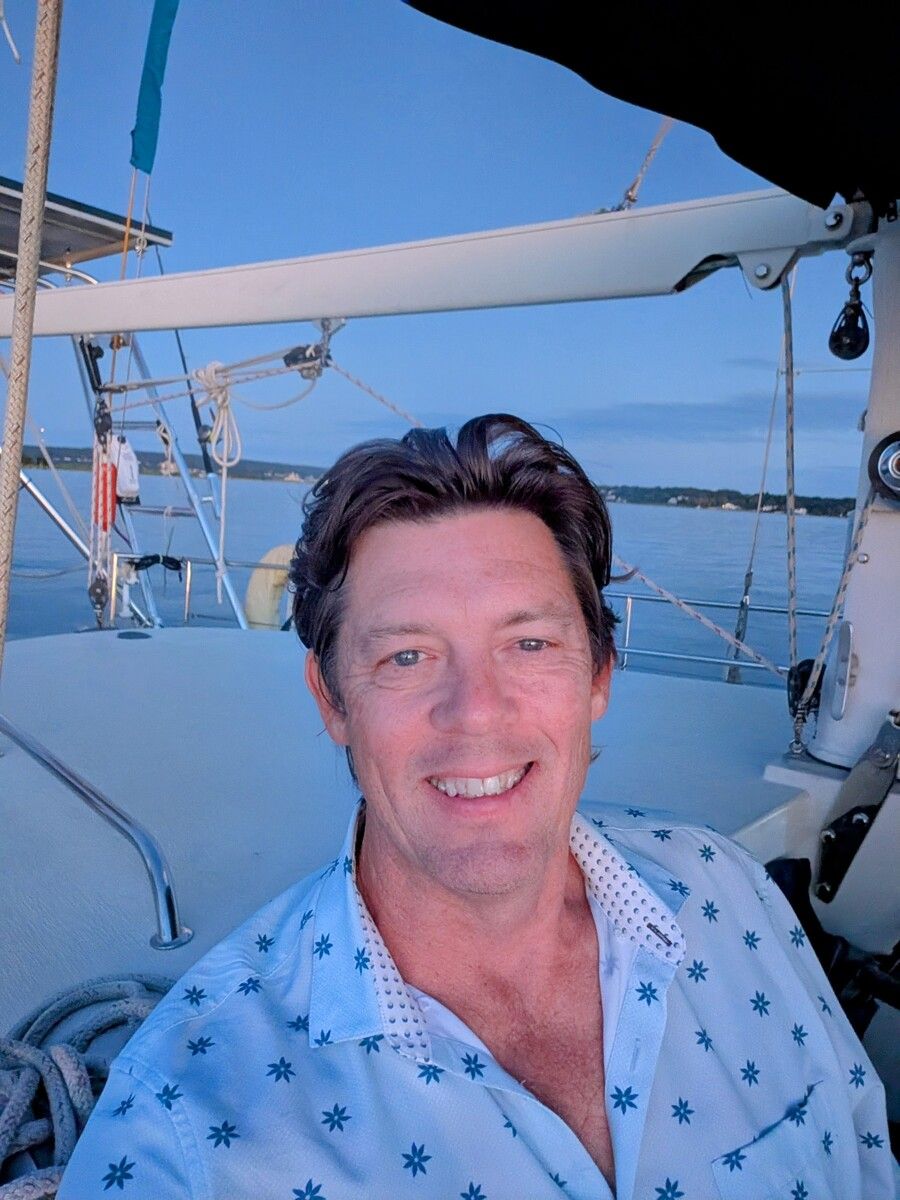
This week opened with a move away from Georgetown. After spending a couple weeks in Elizabeth Harbour, I felt the need for a little space—less radio chatter, fewer dinghies, and a break from the steady social current. So on Tuesday, I pointed Celtic Cross east across the Exuma Sound toward Cat Island, on the southern edge of Eleuthera.
The conditions were brisk. Winds sat around twenty knots out of the southeast to east-southeast, putting me close-hauled for much of the crossing. The sea had built, and the result was a short, square chop that kept the boat working.
I got seasick early on. It still happens now and then, usually after a couple weeks sitting still. No drama—just a reminder to slow down, reset, and let the rhythm return. Once it passed, the day settled into steady miles.
The boat felt good. Maybe quicker than before. Or maybe just cleaner, lighter, and more willing. After scraping barnacles off the keel earlier in the week (see The Log Book below), I couldn’t help but feel like Celtic Cross was moving a little more freely—though how much of that was real and how much was something I wanted to believe is hard to say.
Somewhere along the way, the fishing rod I had on the stern bent hard and the drag starting screaming. My first wahoo aboard this boat. Ten pounds of clean meat by the time it was done. I am always grateful for fresh fish aboard Celtic Cross and a bit of it went on the grill that evening.
I didn’t make Fernandez Bay before the light got too dim to safely navigate around coral heads, so I anchored out instead in a smooth patch of water protected from the East wind by a rock wall. Choosing a quiet night and good light over forcing anything late in the day.
By Thursday, the return passage couldn’t have been more different.
The wind had eased to nine to eleven knots, sitting comfortably about 110 degrees off the port side. Perfect conditions to fly my favorite sail plan on this boat: a poled-out genoa paired with the mizzen ballooner. Balanced, efficient, and quiet in all the right ways.
The seas matched the mood—one-and-a-half to two feet, well spaced and soft. No pounding. No edge. Just easy motion and time to enjoy being exactly where I was.
I took a short video of that sail plan for Song of the Crossing. It’s one of those moments that doesn’t need much explanation—just a boat doing what she was built to do, in conditions that make you grateful you waited.
Together, the two passages felt like bookends: one that required attention and effort, and one that simply rewarded it.
📝Harbor Notes
When I arrived off Cat Island, my first instinct was Fernandez Bay. There was a steady east-southeast breeze, and with it a bit of chop inside the bay. Nothing serious—just enough movement that you’d likely feel it through the night.
Just north of the bay is a long rock cliff, rising fifteen to twenty feet straight out of the water. From my perspective, the water tucked in close to it looked calm and undisturbed. Sheltered. It felt like the better option. (24°19.430N ,75°28.726W)
It was late in the day, and while I could make out the coral heads, I didn’t want to commit to threading farther into the bay without good light. Instead, I eased along the outside, picked a careful path, and settled into that calm water beneath the rock. Fourteen feet. Good holding. I dropped the anchor there.
Tuesday night was quiet. No roll. Just a faint, gentle movement—enough to know you were afloat, but nothing more. I slept well.
I ended up staying two nights.
Over that time, I heard exactly one other boat—someone water-skiing in Fernandez Bay Wednesday afternoon—and later that evening, a catamaran slipped in and anchored inside the bay. Other than that, there was no one. No radio chatter. No dinghy traffic. Just stillness.
It was exactly what I needed. A clean break from Georgetown.
The quiet gave me space to get some work done. I hauled the dinghy up onto the foredeck, flipped it over, and started patterning for new dinghy chaps—protective covers I’ve been meaning to fabricate. With time, light, and no interruptions, I was able to take careful measurements and lay the groundwork. I’ll save the details of that project for another issue.
For now, it was enough to be anchored somewhere peaceful, with room to think and nothing pressing on the schedule.
People of the Tides
In my time in Georgetown, I’ve become friends with a local musician named Lawrence.
I’ve run into him more than a few times now, usually around the Fish Fry or at Exuma Yacht Club. Conversations start easily with him. It usually involves buying each other a beer and music is never far from the surface.
On New Year’s Eve, he got up with the band and sang Drift Away, he called me up to harmonize with him. It was relaxed, fun, and unforced—the kind of shared, impromptu music I enjoy.
Since then, we’ve exchanged numbers and kept in touch. Last night, I ran into him again, and we caught up. I told him about my trip to Cat Island this week and he told me he’d been up in Nassau, in the Coral Harbor area, and stopped into a restaurant with a live band. They called him up to sing. The song he chose was A Whiter Shade of Pale.
That caught my attention—not just because of the song, but because it’s the same restaurant where, last year, I first heard I’m a Boatman. I had spent several weeks in Coral Harbor. Different nights. Different musicians. Same room. The connections keep threading themselves together.
Lawrence is a Bahamian musician, deeply proud of his culture and his work. In the 1990s, he was in a band called Fa’ame, and over time he’s written and recorded songs.
We ended up talking about chords last night, especially minor chords. I’ve been reading more music theory lately—the book my dad gave me over Thanksgiving—so I am always interested in what other musicians can teach me. I don’t fully understand what draws me to minor chords yet. I just know they add something. Weight, maybe. Or honesty.
We’ve talked about maybe getting together to play a bit. Maybe even recording something while I’m here. I really hope we do.
Lawrence is exactly the kind of musician I keep meeting out here—talented, generous, grounded, and unconcerned with turning music into anything other than a shared experience. Proud of where he’s from. Comfortable in who he is. And always just one conversation away from a song.

Lawrence and me at Fish Fry
🎶 Song of the Crossing
At one point during this week’s crossing to Cat Island Sloop John B was running in the background.
The song itself comes out of the Bahamas, long before it ever reached wider audiences. Originally known as The John B. Sails, it was a folk song passed along through generations—part sea story, part complaint, part dark humor. It’s not a heroic sailing song. It’s about a bad trip, a rough crew, and the deep, simple desire to just get home. That sentiment has held up for well over a century.
Most people know it through later interpretations, but here—moving between islands, watching the water change color, feeling how moods shift with wind and distance—it feels closer to its roots. .
I performed Sloop John B last year at Ann O'Malley's Pub, playing it with Harold during one of those open mic nights there. No arrangement to speak of—just voices, strings, and the room carrying the chorus back at us.
There’s something fitting about sailing through the Bahamas with that song aboard. It doesn’t romanticize the passage. It acknowledges that sometimes the trip isn’t great, the boat smells wrong, things go sideways—and still, you keep moving. You finish the song. You make landfall.
Here’s my rendition of Sloop John B and that favorite sail plan I mentioned. Poled out Genoa and Mizzen Ballooner
Melodies Aloft
Friday night, when I ran into Lawrence at Fish Fry, he told me he had sung A Whiter Shade of Pale by Procol Harum up in Nassau at the restaurant in Coral Harbor. He was so animated when describing the key board player in the band he sang with that when I got to the boat that night, I queued it up.
The song leans heavily on minor chords, and as I mentioned, lately that’s been pulling at me. I can’t fully articulate why yet. I don’t know enough theory to name exactly what’s happening, but I know how it affects me. A kind of unresolved feeling that doesn’t ask to be fixed. It just sits there, honest and open.
The other thing that defines this song—for me—is the organ.
That Hammond sound, pushed through a Leslie rotating speaker, is unmistakable. It breathes. It swells. It moves even when the rest of the band holds steady. I remember seeing one up close once at C-Boy’s,the night Jimmy Vaughan and Steve Miller were on stage. There it was, a Hammond with the Leslie cabinet beside it, quietly waiting its turn. Once you’ve seen and heard that setup live, you never forget it.
In A Whiter Shade of Pale, the organ isn’t decoration. It is the song. It carries the melody, drifts between chords, and gives those minor harmonies space to linger. Nothing rushes to resolve. That’s the magic.
If you listen closely—or better yet, watch a live performance—try to isolate those two elements: the minor chord movement, and the way the Leslie makes the organ feel like it’s slowly rotating through the room. Once you hear it, it changes how the whole song feels.
📕Log Book
Sunday
Today I took the onboard scuba tank in to be inspected and filled. The shop in Georgetown couldn’t fill it—the tank failed its visual inspection. The air had leaked out while it sat unused over the past year, and corrosion had started forming on the interior walls. They explained that once a tank sits empty that long, it’s common.
The shop offered to send it to Nassau for hydrostatic testing and further inspection, though they warned it would likely fail. Shipping via the island freight link would cost $15. At that price, it was worth trying, so I told them to go ahead and send it.
In the meantime, I rented a filled tank and dove the boat to clean the bottom.
When we hauled out in Fort Lauderdale to repair the hole in the hull last month, I noticed significant barnacle growth under the keel. The hull itself—repainted with antifouling in April 2025—was in good shape, but the underside of the keel and the prop had accumulated a heavy layer of barnacles. Since I’d noticed it, and it had been weighing on my mind. I wanted to take care of it.
I dove the hull Monday afternoon. The work was slow and physical, grinding through multiple layers of growth. Chipping away with a paint scraper and dry wall knife. I should have worn gloves; my hands took a beating.
The end result was good. The keel is clean, and the worst of the growth is gone.
On this week’s sail across to Eleuthera, the boat felt quicker. Same point of sail, similar conditions—and it just seemed like she was moving a half a knot faster. How much of that was real and how much was something I wanted to believe after the effort is hard to say. But the boat felt better, and that was enough.
I took some GoPro footage during the dive. It’s not pretty work, but it tells the story.
🧭My Bearings
Every now and then, I need to take a step back.
Even in a place like Georgetown—beautiful, social, easy—it’s possible to feel full. Not overwhelmed, not unhappy. Just full. Days stack up. Conversations overlap. The rhythm gets set for you instead of by you.
There’s nothing wrong with that. But I’ve learned that if I stay in it too long, I stop hearing myself think, and that’s something I am trying to do more of right now.
Leaving for a couple of days wasn’t about escaping anything. It was about creating a little space. Enough distance to notice how I was actually feeling, not just how busy or engaged I was. Enough quiet to reset.
The crossing helped. It always does. Wind, trim, timing, water—simple things that require attention and reward it immediately. The anchorage did the rest. No roll. No noise. Long stretches of nothing demanding a response.
By the time I turned back toward Georgetown, things felt clearer. Lighter. Not because anything had changed there, but because something had changed in me.
I don’t think this is unique to sailing, or even to being out here. It’s just easier to see when movement is literal. Sometimes the healthiest thing you can do is step away—not to abandon what you’re doing, but to return to it with intention instead of momentum.
I’m learning to pay attention to that signal when it shows up.