🌊The Sea State
Saturday, September 20th, around noon.
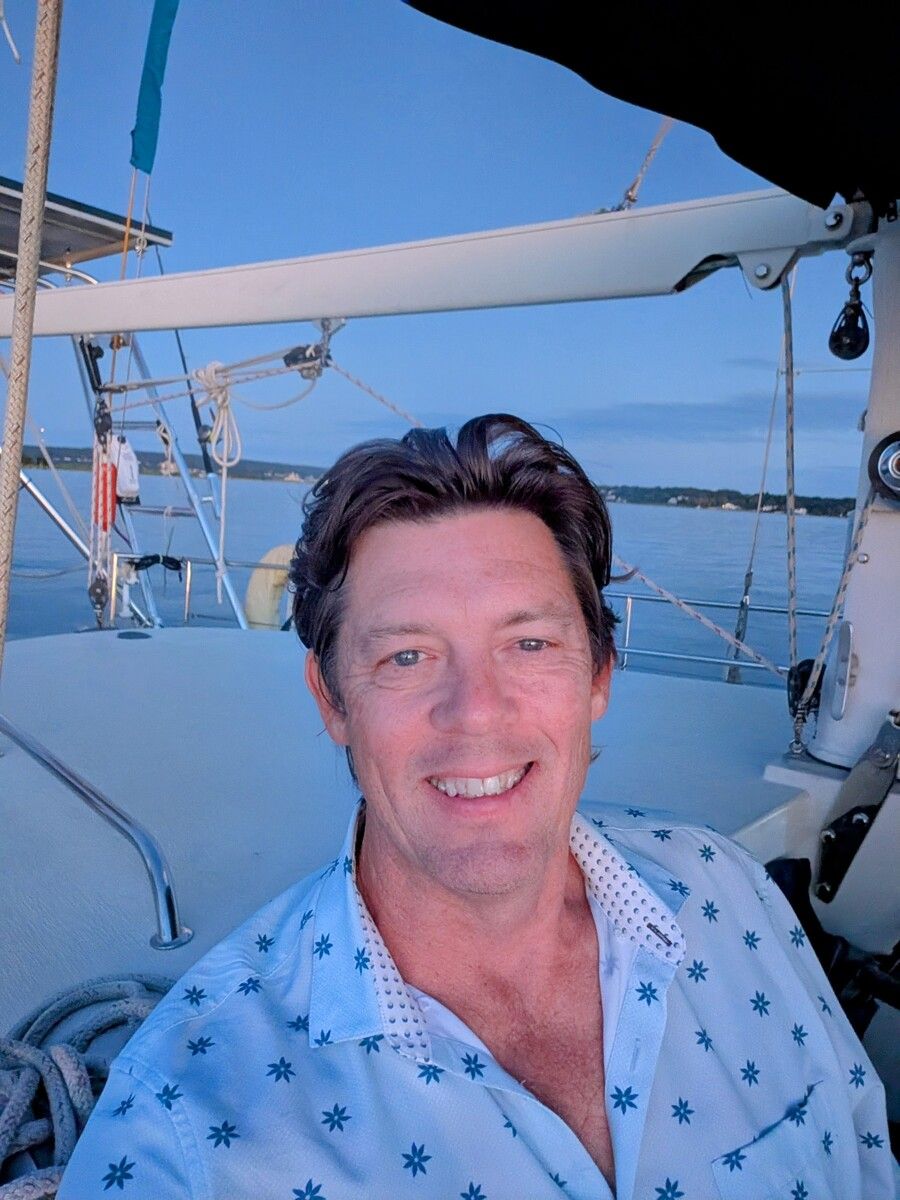
Antony and I slipped the lines in Fort Lauderdale after wrapping up the last loose end of the lithium installation. The final issue—a wiring harness that didn’t behave the way it should—was sorted out by Johnathan from Maz Ocean earlier this morning. It felt good to close the loop on that. I plan to do a deep dive into the lithium battery install in separate post.
We eased out of the slip around 11:30am today, made a short stop at the fuel dock to top off on diesel, then turned east through the inlet. Once clear, we settled on a course toward Bimini.
At the moment, we’re motor-sailing. The wind hasn’t quite filled in enough to carry us on canvas alone, but with the sails up we’re getting a bit of lift and steadying the motion. Seas are mild—around two feet, well-spaced—and the ride is comfortable. The kind of conditions that let you find a rhythm quickly.
We’re expecting to reach Bimini around 8:30 this evening. From there, the plan is to continue on—sailing overnight tonight and again tomorrow night—working our way south toward Georgetown in the Exumas.
It’s especially good to have my son, Antony, aboard for this passage. Sharing the watches, the conversations, and the quiet stretches in between. Some passages are about miles covered. Others are about who’s with you while you cover them.
Right now, the sea feels cooperative.
The boat feels ready.
And we’re pointed where we mean to go.
📝Harbor Notes
By the time this goes out, I’ll be underway. Harbortown will already be slipping astern, becoming one of those places you measure in what got done rather than how long you stayed.
I won’t claim Harbortown is unique in the world. There are probably other marinas like this—maybe better ones—and I hope I find them. But it is the first place I’ve encountered where nearly everything I needed was close at hand, and now I have something solid to compare against.
The concentration of technical knowledge here is impressive. I could walk ten minutes and find nearly any part, material, or expertise I needed. Filters for the engine, transmission, and generator. Fluids. Spare parts for the dinghy’s outboard. Electrical contractors capable of handling a full lithium conversion without drama. The kind of work that usually sends you driving across town—or waiting weeks—was often a short walk away.
That proximity changes how work unfolds. Small tasks don’t get postponed. Questions get answered quickly. Problems shrink instead of growing legs. Over the course of a few weeks, that adds up in ways that are hard to appreciate until you’ve lived through it.
I’m usually wary of talking about “vibe” when it comes to well, anything, but some places earn the word. For me, that came into focus through Jason, the yard manager.
For nearly a week, I was dealing with what is essentially every boat owner’s quiet nightmare: a hole in the boat, with the water kept at bay by a small screw. We needed to haul out. The lift was only a few hundred yards away, but getting there meant moving a single-screw boat—with a bow thruster, yes, but still a single screw—down a narrow raceway lined with yachts worth many times more than Celtic Cross. The winds during that stretch were right on the edge of what I was comfortable with.
Jason understood that immediately.
From the beginning, he said one thing clearly: I want you to feel comfortable moving your boat here to the lift. No pressure. No eye-rolling. No sense that I was holding anyone up. So we waited. We watched the weather. And when Friday finally came with calm air, we moved the boat without drama.
That mattered.
Not because it saved time or money, but because he didn’t make me feel like I was wasting theirs. That kind of professionalism—quiet, patient, confident—is harder to find than any spare part.
Wednesday night at Grumpy Gary’s, the marina staff were having their Christmas party. I ran into a few of them and was greeted like an old friend. Someone said, “Hey, remember Andy? He’s the owner of Celtic Cross over in F dock.” There may have been a little help from the bar, but the warmth felt genuine.
Places like this don’t just make projects easier. They give you a baseline. From here on out, I’ll know what “good” looks like—and I’ll be measuring other harbors against it as I go.
🎶 Melodies Aloft
I was walking down Las Olas Avenue in Ft Lauderdale to pick up a Christmas gift.
I stopped into Tommy Bahama and discovered they had a restaurant next door. There was an acoustic guitar player inside—good, relaxed. I sat down, had dinner, and let the music sit where it belonged: in the background, steady and familiar.
But every now and then, something else cut through.
Brass.
At first it was faint—just enough to make you wonder if you were imagining it. Then it came again, louder, carried in from the street. You could feel it more than hear it, the way brass does when it’s played outdoors.
When I finished dinner and stepped back onto the sidewalk, I found the source.
Five guys, right there on the street: 2 trumpets, trombone, tuba, and a snare drum. No amplification. No stage. Just a tight semicircle of sound pushing outward into the evening. They call themselves A-1 Brass.
I learned they come from different HBCUs across the Southeast. Different schools, same musical language. They’re all based out of Broward County now, and it shows in how easily they lock in—rhythm first, horns sharp, the tuba doing that impossible job of being both foundation and motion at the same time.
It wasn’t background music. It stopped people mid-stride. Conversations paused. Phones came out. Smiles spread without anyone quite realizing why.
This is the kind of music you don’t plan for. You don’t buy a ticket. You don’t even know you’re looking for it. It just appears.
Some melodies belong to rooms.
Some belong to streets.
And once in a while, they rise up into the open air and remind you to stop walking.
Check out A1 Brass.