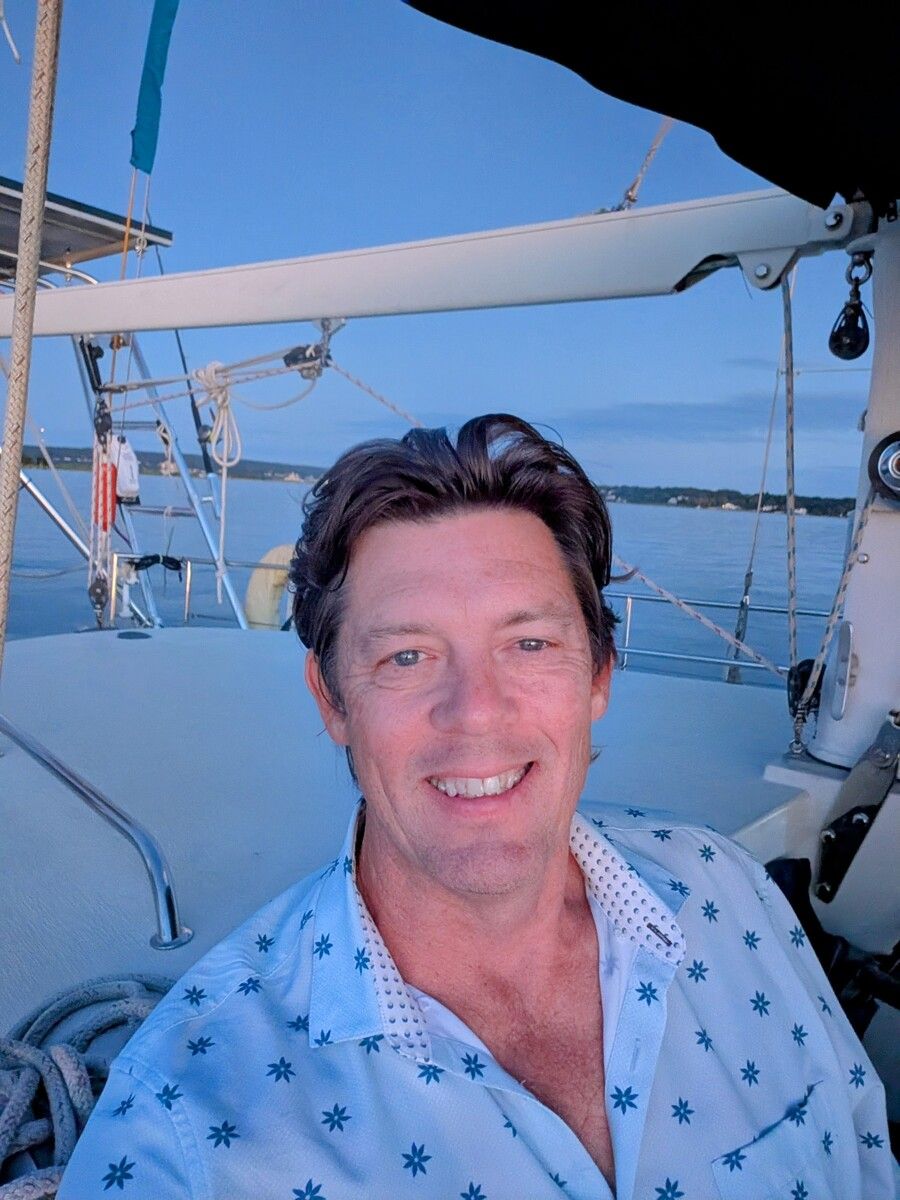
🌊The Sea State
Tuesday I made the crossing from Hatchet Bay, Eleuthera over to Nassau on New Providence Island. I’d spent about four days tucked into Hatchet Bay and it was time to move on, partly because I needed to be in Nassau ahead of a flight the following week and partly because a private dock had opened up for me on the southwestern side of the island.
The wind that morning was light out of the east. I set the mizzen ballooner and the genoa, which is usually a reliable light-air combination on Celtic Cross, but there just wasn’t enough breeze to keep the speed up. Since I wanted to be tied up by about 4 p.m., I ended up motor-sailing for most of the passage. Had I been sailing more than 6 hours, I would have considered flying the genoa and ballooner poled out for the downwind run.
The seas were running about two to three feet and following me the whole way, so it was an easy ride even if it wasn’t the kind of sail where the boat really stretches her legs. One of those days where the engine lends the wind a little help and the miles slide by steadily toward the dock.
📝Harbor Notes
I’m currently tied up at a dock on the southwestern side of New Providence. I’ve stayed here before—two seasons ago I spent nearly a full month tied up here while I was transitioning between roles at work. At the time the job demanded most of my attention, so sailing wasn’t really on the agenda. Having the boat secured at a dock, with grocery stores within walking distance, made life a lot easier for both me and the crew who were with me then.
The dock itself is privately owned by a couple who have lived here for more than sixty years. I won’t mention their names, because the place operates almost entirely by invitation. Generally, you only tie up here if you already know someone who has stayed before. I was fortunate to get an introduction two years ago when one of our crew members had previously stayed here and reached out as a blow was moving through the area.
Over time, a kind of informal family of cruisers has formed around this dock. Many of the boats that come through have known each other for years, sometimes decades. This week we were visited by a skipper who has been coming here for forty years. He first arrived on a sailboat with his wife and later returned many seasons on a trawler. His wife passed away within the last year, and this trip was meant to be his last visit to the Bahamas before selling the boat. He stopped here one more time to see old friends and say goodbye. It was a touching moment for everyone who gathered on the dock that evening.
Life here has its own rhythm. Every day at five o’clock people wander down for an informal happy hour. Someone brings rum drinks, someone else a bottle of wine, and everyone sets out a few snacks to share. I usually bring my guitar along, and it tends to make the rounds as the sun goes down. It’s a simple routine, but over time it’s created something special—a small, welcoming community built around a quiet dock and a shared love of the water.
🎶 Song of the Crossing
This week’s song is “If I Needed You” by Townes Van Zandt.
Being at this dock again reminded me how strong the sense of community is among cruisers. There’s an understanding that we’re all out here doing something that requires a certain amount of self-reliance—but also a willingness to help each other when something comes up.
Earlier in the week I was working on the relay that would allow my bilge alarm to trigger a remote alert through the Victron system. I needed a couple of spade connectors to finish wiring the harness. After digging through every locker on the boat and not finding them, I had a feeling that someone on the dock probably had exactly what I needed.
Sure enough, one of the couples here did. They handed me five. It was a small thing, but it’s a perfect example of how the cruising community works. Whether it’s tools, parts, advice, or just another set of hands, people help each other without thinking twice about it.
That spirit of looking out for one another is what brought this song to mind Saturday morning. If I Needed You is a simple song about showing up for someone when they need you. Out here on the water, that sentiment feels especially true. Boats break, weather changes, plans fall apart—and there’s always someone nearby willing to lend a hand.
So this week I recorded my own version aboard Celtic Cross and added it to the newsletter. It felt like the right song for a place like this dock and the people who gather here each evening.
📕Log Book
It was a fairly quiet week on the maintenance front, but being tied to a dock always opens the door for a few projects that are harder to do at anchor. I took advantage of the fresh water connection to give the decks a proper rinse and also flushed the outboard motor—two simple jobs that are much easier when you’re not rationing water from the tanks.
The more interesting project came from the fact that I’m about to leave the boat for a few weeks. I started thinking about what kind of remote monitoring I could put in place while I’m gone. When I upgraded the batteries to lithium, the installation included a Victron Cerbo GX. It acts as a communications gateway for the onboard electrical systems, sending data to Victron’s cloud dashboard so I can check things like battery charge and system status remotely.
The Cerbo also has digital inputs and relays that can be used for alerts, so I wondered if I could connect it to my bilge high-water alarm. The bilge alarm itself is simple—a float switch in the engine compartment that closes a circuit if water rises high enough. Normally that triggers a buzzer on the boat so you know there’s a problem. The issue, of course, is that a buzzer doesn’t help much if nobody’s onboard to hear it.
My first attempt involved wiring into the buzzer circuit directly and trying to trigger the Cerbo’s digital input using an external voltage. That experiment ended quickly when I popped the fuse in the buzzer circuit—clearly not the right approach.
The solution ended up being a relay. I wired a 24-volt relay into the buzzer circuit so that when the bilge alarm receives voltage, it energizes the relay coil. That closes a completely separate circuit that’s isolated from the buzzer wiring. On the Cerbo side, the digital input normally sits at about 3 volts, and when the relay closes it pulls that input down to zero volts—exactly the change needed to trigger an alert.
After configuring the alarm in the Victron system as a bilge alert, I tested it. When I manually triggered the float switch, I immediately received an email that the bilge alarm had activated. When I reset it, I received another message saying the condition had cleared. It’s a small modification, but it gives me a lot more confidence leaving the boat unattended for a few weeks.

Emailed Alert - High water alert in engine room.
The whole exercise also got my mind spinning about something else: telemetry. My MaintHub app already tracks preventative and corrective maintenance, but working through this problem made me realize how useful it would be if equipment could also report its own operating signals. Things like temperature readings, run hours, or even how often the bilge pump cycles. On a boat, a bilge pump that suddenly starts cycling more frequently is often the first warning sign of trouble long before a high-water alarm goes off.
That idea—equipment reporting its own health in real time—opens up a whole new direction for MaintHub that I’m starting to explore.
🧭My Bearings
This past week marks a bit of a milestone for me. I’ve officially wound down my work commitments for a while and am shifting my focus to sailing, along with a few personal projects like MaintHub. But mostly, this feels like the beginning of a new chapter—one with a little more room for travel and time on the water.
Next week, I’ll be leaving the boat here at the dock and heading off to visit friends in Austin, Texas before continuing on to see my son in Hawaii. I’ve been in the Bahamas since the middle of December, and while places like Georgetown offer plenty of activity and a great cruising community, there’s nothing quite like going home to see friends and family. I’m learning how important those moments are for resetting and reconnecting.
Because of that, I’ll likely be traveling for most of the rest of March. I’m not entirely sure whether a newsletter will go out while I’m on the road. If you don’t see one in your inbox next Sunday morning, don’t worry—everything’s fine. It just means I’m taking a little time away.
And if inspiration strikes while I’m traveling, one might still appear. Otherwise, once I’m back aboard Celtic Cross and moving again, the weekly updates will pick right back up.
